People get pretty upset about micro-transactions in their video games, especially if those games were full price at retail. And to be clear, I absolutely agree that bilking your player-base for more cash after they’ve given you sixty dollars is pretty sleazy. However, I reserve judgement about the level of sleaze until I’ve looked at the context.
Can the player pay to win, gaining an unfair advantage over players who can’t or won’t spend the extra money? Gross. Does the game have DLC that feels like it was carved out of the base game to be sold later? Disgusting. Are the add-ons purely cosmetic with no impact on gameplay other than personal enjoyment? Alright, I can accept that. But those cosmetics had better not be exclusively dished out by a random number generator.
And this is how the conversation brings us to Blizzard. Since their digital card game Hearthstone hit the scene in 2014, Blizz has been in the micro-transaction market. Technically, they were already in it thanks to purchasable mounts and pets in WoW, but this was the first time the game relied on micro-transactions to survive.
Being free-to-play, Hearthstone passes my litmus test for acceptable mini-buys. The game gives every player enough cards to compete without spending a dime. It does inch a little close to pay-to-win, since players who buy booster packs will often have newer, more powerful cards than me. On the other hand, moneyless players can still earn booster packs by completing daily quests for gold. It’s a slow process, and you’ll likely never get all the cards, but you should be able to get what you need.
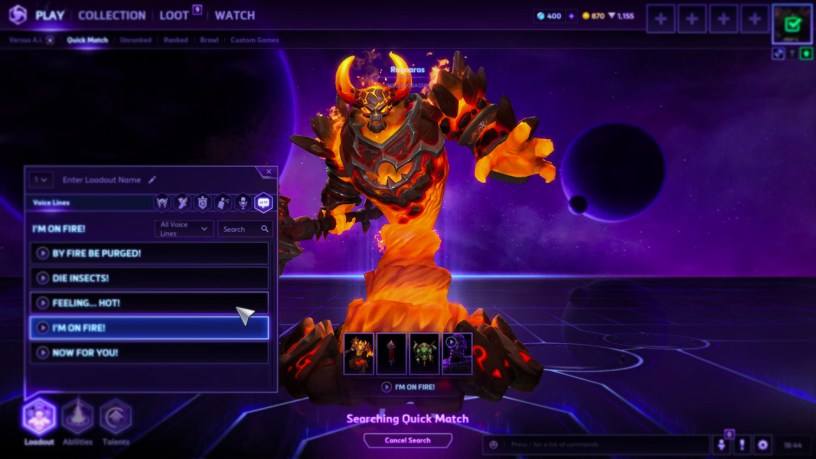
Heroes of the Storm is Blizzard’s other free-to-play offering. It’s their take on the MOBA genre, and initially, I didn’t give it much attention. I played a little at launch for some freebies, but it didn’t feel like my jam. Skip to November 2016, when Blizzard roped in the entire Overwatch community with a clever cross-game promotion. Playing 15 games of HotS with a friend would get you free stuff for Heroes, but it would also get you a Genji skin for Overwatch.
Suddenly, Heroes’ general chat was flooded with “Looking for Genji group” and similar messages. Bots were totally acceptable opponents as long as you had a Battle.net friend on your team. In addition, sticking around for 30 matches would grant you even more HotS characters, so I gave it a serious try and found myself having a jolly good time.
Next week, Blizzard is rolling out some major changes to leveling and loot in Heroes, but until then it works like this. Even if you don’t own a single character, there are always a few that are free. Which ones are free rotates on a weekly basis. This system let’s you try a large variety of heroes and find some favorites. Heroes can be added to your roster permanently with either gold or real money. Alternate skins for your favorites can also be bought for real money, except for Master skins which require gold and a lot of time using that character.
Just like Hearthstone, Heroes of the Storm passes my tests. You can play to your heart’s content without spending real money and still be competitive. That gold I mentioned? You earn it by playing matches, completing daily quests, and leveling up your dudes. And it isn’t a pitiful amount either. By the time I had completed my 30 matches, I had enough gold to buy whichever of the most expensive characters I wanted. And then I did something crazy. I gave them real money.
By this point, I had enjoyed hours of cooperative fun with my wife and friends. I was happily doing my dailies and tended to stay on to help total strangers earn their Genji skins. I had enough free heroes to keep the experience novel. And all that time, Blizz didn’t pressure me to spend my hard earned cash.
One day, I wandered into the in-game store out of curiosity and noticed quite a unique bundle. It contained a good number of beloved Warcraft characters and was discounted to ten bucks, the retail cost of a single 10,000 gold hero. Why not? Don’t they deserve something for making this enjoyable experience?
So yeah, I’ve spent money on free-to-play games. I spent some on Hearthstone too, buying a couple of PvE expansions and a few booster packs. In small doses, I don’t think there’s anything wrong with it. The continuous flow of income after launch allows these games to keep churning out new content. So as long as the result is worth my while, I’ll happily tip a developer for a job well done. Just, you know, keep it under control.
 Never Time To Play
I’ve spent money on Overwatch as well, which is so silly since the system is still randomized, but damn do I love loot boxes.
LikeLike